Belgrade’s standout exhibitions of the moment
Bojana JovanovićDecember 3, 2025

Belgrade is the city where I grew up, the city where I create, and the one I share an unbreakable bond with. Lately, the cultural and artistic scene has been facing serious challenges—from the lack of space and financial support to global shifts that inevitably affect us as well. Despite it all, this city has an incredible ability to generate new creative energy.
I want to highlight a few current exhibitions that, through different media and perspectives, showcase Belgrade’s art scene and its ability to stay relevant. These exhibitions bring the right mix of inspiration, innovation, and playfulness—perfect for anyone who wants to experience the city’s spirit through art, whether you’re here for just a few days or looking to add something new to your weekend.
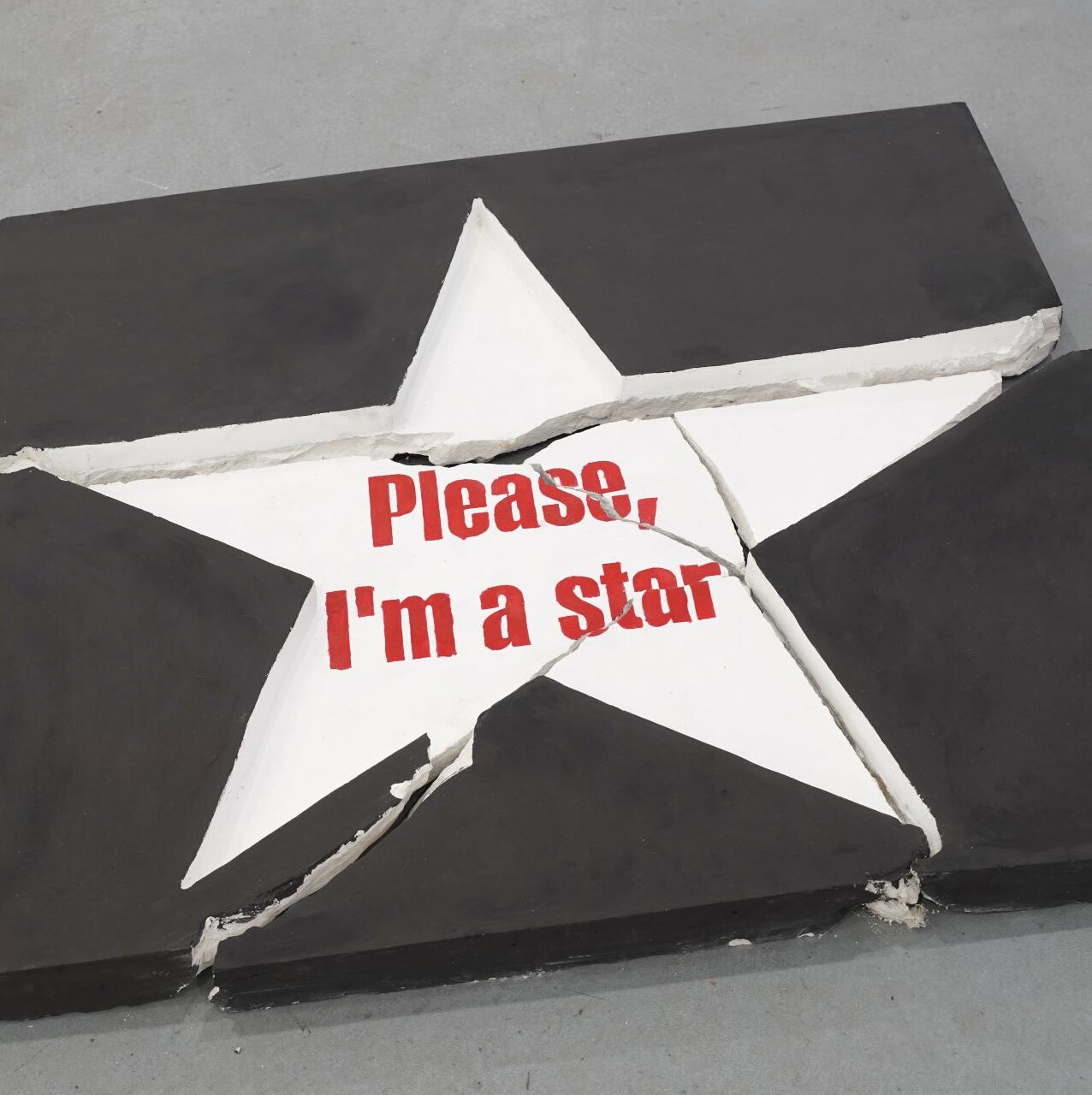
Sveta Šer explores contemporary materiality through transformation, decay, and the re-establishment of relationships between humans and their surroundings. Starting from an “archaeology of the present,” she focuses on objects that have lost their original function and crossed the threshold of usefulness. Through both visual and conceptual work, the artist engages in a dialogue with Martin Heidegger’s phenomenology and the idea of “things in themselves” — objects that exceed function and fixed meaning. The exhibition raises questions about the limits of visibility and the possibility for art to capture moments of transformation that usually pass unnoticed.
WHERE? Galerija Kula Cetinjska
WHEN? until December 21st
The exhibition Masterpieces brings together master’s students from all departments of the Faculty of Fine Arts in Belgrade. It began as a space for collaboration, exchange, and collective reflection on artistic practice, and over the years it has become an important platform for meeting, dialogue, and support. For many young artists, this is their first step outside the academic setting and into a professional context, offering a chance to present their work to a wider audience and reflect on how it communicates with the community.
This year’s edition comes in exceptionally difficult circumstances. The academic year was marked by student blockades and protests following the tragic event in Novi Sad, in which sixteen people lost their lives. Classes were suspended and students’ everyday lives were profoundly altered. They spent most of the year in the streets, fighting for justice, dignity, and a free society, while institutional work was nearly impossible. As a result, the exhibition is taking place later than usual, at a moment when many participants have already completed their master’s studies, and without the customary visits of the U10 collective to the faculty. Despite everything, the students persevered. They put their time, energy, and education in the service of civic engagement, enduring pressure, threats, and personal risk, yet they managed to unite people, raise awareness, and restore a sense of hope. Their struggle is a reminder that art does not exist outside society and that ethical and creative responsibility are inseparable. The works presented this year affirm that art endures even when everything seems impossible. Masterpieces remains a space of exchange, growth, and continuity, but also a testament to the resilience of a new generation and the strength of solidarity that defined this year.
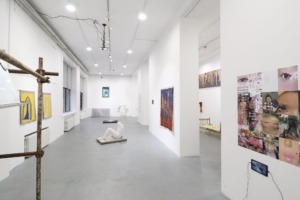
Photo: Nina Ivanović
WHERE? Art space U10
WHEN? until December 6th
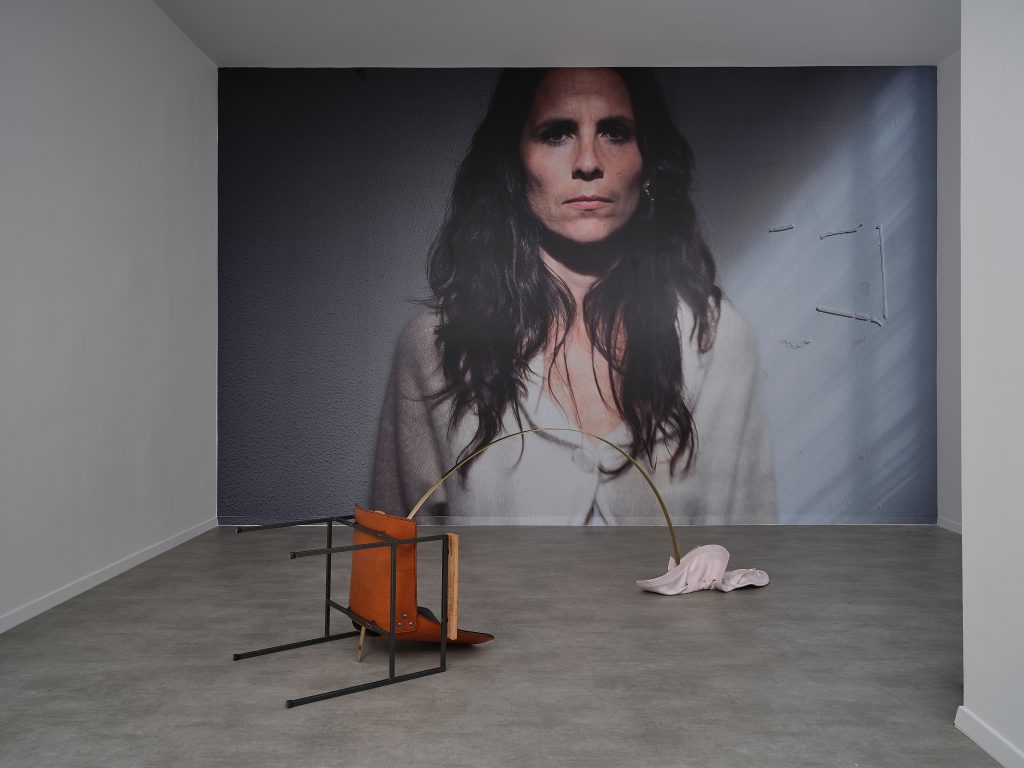
From the text by the exhibition curator Jelena Pavićević: The exhibition ROOM 0 by artist Isidora Branković approaches the body as a central instrument for analyzing, resisting, and representing socio-economic, class, and biopolitical relations. The artist treats the body as a site where institutional codes and social norms are inscribed, but also as a material element capable of articulating fractures within the order that defines it. In this sense, ROOM 0 moves beyond the spatial definition of an exhibition and operates as a zero-degree space of subjectivation, a field where identity becomes layered through its interaction with capitalist, post-Yugoslav, and neoliberal structures of power.
The works on view performatively activate different modalities of subjective experience: exposure, burden, blockage, sensory deprivation, ritual transmission of voice, horizontal feminist cohesion, the crossing of professional and class boundaries, as well as mechanisms of humiliation and sexualization. These gestures do not function only through narrative; they operate as micropolitical interventions that map overlapping regimes of visibility: what is recognized as art, what is recorded as labor, and what remains invisible or depoliticized in everyday life.
WHERE?Belgrade Youth Center
WHEN? until December 28th
The exhibition Mythology of Everyday Life at DOTS Gallery brings together works by Marina Marković, Astrid Oudheusden, Monika Sigeti, and Ana Simić—artists of different generations and poetics. Each of them sees the everyday as a space where the personal and the universal intertwine, and where art turns the transient into the lasting. Marina Marković places the body at the center of her work, revealing it as a site where the fundamental antagonisms of female existence are inscribed. The body is both a biological fact and a cultural construct, a surface onto which social norms are written. Through pastel tones and precise lines, Marković creates a contrast between external aesthetics and raw experience, showing that the aestheticization of pain can become a means of shaping identity. Astrid Oudheusden uncovers hidden meanings within everyday scenes. Her works do not impose a narrative but create a meditative atmosphere where the private becomes universal. Color, light, and carefully composed frames turn ordinary moments into signs that transcend the personal. Monika Sigeti transforms the familiar into the fantastical, opening a space where identity and the body are not fixed categories. Ana Simić creates digital drawings that turn intimate experience into a new iconography of contemporary womanhood, crafting symbolic images that function beyond the private sphere. According to curator Ana Simona Zelenović, the selection of artists forms a kind of collage—reflecting the diversity of female experience, where the personal becomes the foundation for new myths and collective memory.
WHERE? DOTS Gallery
WHEN? until December 6th
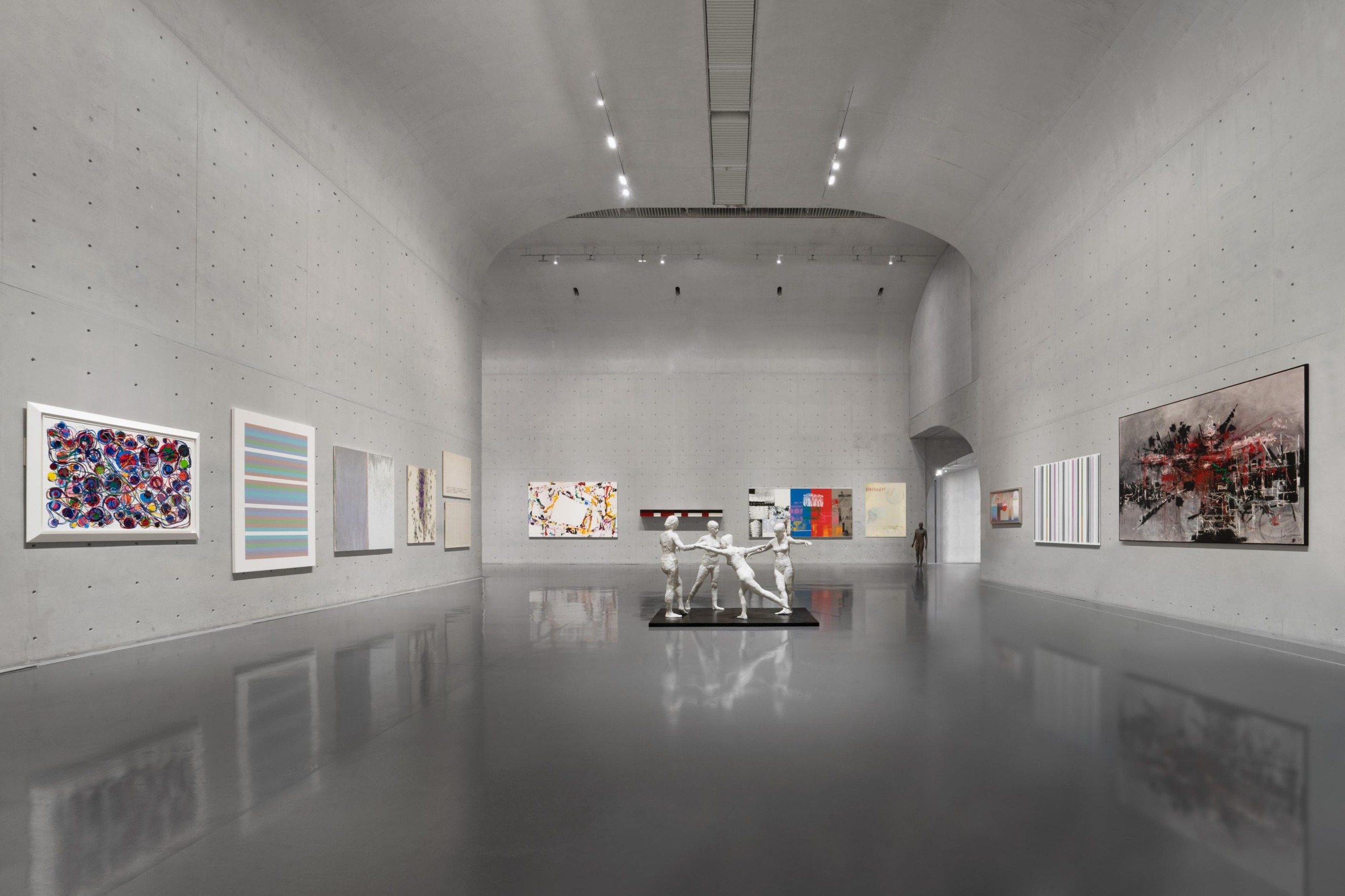
This exhibition, which will remain open for the next two years, marks the beginning of a new long-term cycle at the Museum, through which three major presentations will reaffirm the value of its collection, spanning artworks from 1900 to the present day. The first part of the cycle, Turning Points Toward Modernity: The Art of Society 1900–1945, offers a layered reading of the development of art in Serbia and Yugoslavia during the first half of the 20th century.
Through more than 400 works by 150 artists, the Museum presents its collection not as a linear sequence of styles, but as a heritage that continues to shape our understanding of both art and society. The exhibition guides visitors through chronological and thematic chapters: from the first modernist breakthroughs and avant-garde experiments, to the artistic practices of the 1930s that reflect social divisions and introspective questioning. The thematic framework explores the city and the bourgeois identity as chroniclers of modernization, the portrait as the “face of an era,” movement through form and body, and sculpture and relief as possibilities of spatial expression.
A special focus is placed on the Portrait of an Artist series, featuring key figures of pre-war modernism such as Petar Dobrović, Sava Šumanović, Milena Pavlović Barilli, and Nadežda Petrović. The curatorial team—Mišela Blanuša, Dr. Rajka Bošković, and Žaklina Ratković, presents the collection as a dialogue between art and society, reaffirming its significance and the Museum’s central role in preserving and interpreting cultural heritage.
WHERE? Museum of Contemporary Art, Belgrade
WHEN? until March 1, 2027
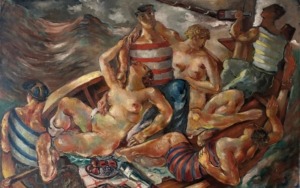
Photo: Muzej savremene umetnosti Beograd
9 SOLO EXHIBITIONS
Across three venues of the Cultural Centre of Belgrade, seven exhibitions have opened as part of the project 9 Solo Exhibitions. In the Art Gallery, works are presented by Nina Ivanović, Milica Crnobrnja Vukadinović, and Goran Despotovski; in the Podroom Gallery, by Ana Mušćet and Mladen Bundalo; and in the Artget Gallery, by Filip Rađenović and Luka Trajković.
Due to budget cuts, the curatorial team of the Cultural Centre decided to merge projects originally planned for the second half of the year into one joint exhibition period. The title of the project also alludes to two exhibitions that could not be realized. Nina Ivanović, in Topčiderka, explores the fate of the Belgrade river and the consequences of human neglect, while Milica Crnobrnja Vukadinović, in Micro Territories, guides visitors through intimate spaces of solitude. Goran Despotovski’s Ascending/Descending (ASC/DESC) features depersonalized figures symbolizing helplessness and inauthenticity. Mladen Bundalo’s Domus Vulgaris examines the home as a living entity with its own history and the challenges of contemporary life. Ana Mušćet’s Corpus: Passion Fruit. Albedo reflects on collective trauma through a video and site-specific installation inspired by those forcibly taken during the Homeland War.
Filip Rađenović’s Charge presents drag characters marked by visible traces of violence, emphasizing the experiences of LGBT+ individuals, while Luka Trajković’s Where I’m Calling From uses photography to convey a cinematic, narrative sensitivity toward untold stories and delicate, almost imperceptible moments.
The 9 Solo Exhibitions project demonstrates how the Cultural Centre of Belgrade responds to financial and social challenges, reaffirming its commitment to supporting contemporary artists and fostering dialogue about whom culture belongs to and for whom it is created.
WHERE? Cultural Centre of Belgrade
WHEN? until December 31